
For couples planning IVF treatment, egg retrieval is an important step in the journey toward pregnancy. Many women have questions about how eggs are collected, whether the procedure is painful, and what happens afterward. Understanding the process can help reduce anxiety and make the IVF journey feel more manageable.
At a Dr. Padmaja IVF Center, understanding each stage of fertility treatment can help patients feel better prepared to discuss their options with their fertility specialist.
What Is Egg Retrieval During IVF?
Egg retrieval, also called oocyte retrieval, is a medical procedure in which eggs are collected from the ovaries during an IVF cycle. These eggs are then taken to a laboratory, where they may be fertilized with sperm to create embryos.
Before egg retrieval, fertility medications are usually prescribed to stimulate the ovaries to develop multiple follicles. Blood tests and ultrasound scans are used to track the growth of these follicles when needed.
How Are Eggs Retrieved During IVF?
The egg retrieval process generally involves the following steps.
1. Ovarian Stimulation
The first step involves taking prescribed fertility medications that encourage the ovaries to develop multiple follicles. Each follicle may contain an egg.
The fertility specialist monitors the response to medication and adjusts the treatment plan when necessary. This helps determine the appropriate time for egg collection.
2. Trigger Injection
When the follicles have developed sufficiently, the doctor recommends a trigger injection to support the final maturation of the eggs. Egg retrieval is scheduled at a specific time after this injection.
Following the timing instructions carefully is important for the procedure.
3. Preparing for Egg Retrieval
Before the procedure, the medical team provides instructions about fasting, medications, and other preparations. Egg retrieval is generally performed with sedation or appropriate pain relief to help maintain comfort.
Patients should follow their clinic’s instructions and arrange for someone to accompany them home if sedation is used.
4. Collecting the Eggs
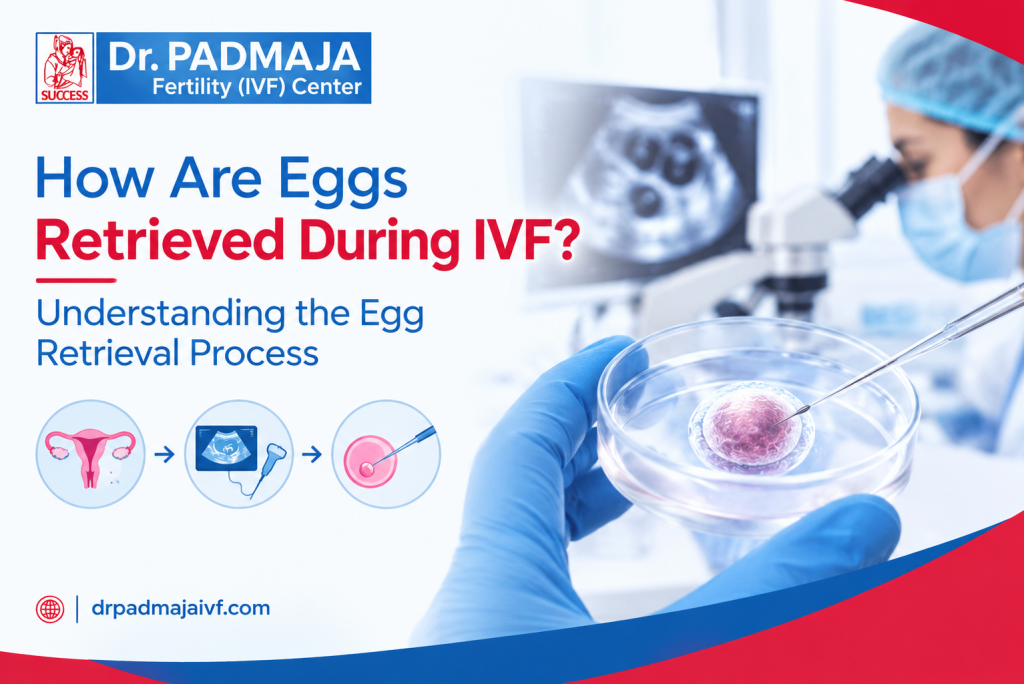
During egg retrieval, the fertility specialist uses ultrasound guidance to pass a thin needle through the vaginal wall into the ovarian follicles. The follicular fluid is gently collected and examined by an embryologist to identify the eggs.
The process typically takes 15 to 30 minutes, although the exact time may vary based on each circumstance.
5. After the Procedure
After egg collection, patients are monitored for a short period before going home. Mild cramping, bloating, or light spotting may occur temporarily.
Most patients can resume normal activities gradually, following their doctor’s advice. Severe abdominal pain, heavy bleeding, fever, breathing difficulty, or significant swelling requires prompt medical attention.
What Happens After Egg Retrieval?
Once the eggs are collected, the embryology team assesses them and determines which are suitable for fertilization.
The eggs may be fertilized using conventional IVF or Intracytoplasmic Sperm Injection (ICSI), depending on the medical circumstances. The resulting embryos are monitored as they develop.
An embryo may then be transferred into the uterus, or suitable embryos may be frozen for future treatment. Not every retrieved egg will be mature or result in an embryo, which is a normal consideration in IVF treatment.
Is Egg Retrieval Painful?
Many women worry about pain during egg retrieval. Because the procedure is generally performed with sedation or appropriate pain management, significant discomfort during the procedure is usually minimized.
Afterward, some women experience temporary pelvic discomfort or bloating. The experience varies, so it is important to discuss any concerns with the fertility specialist before treatment.
Choosing the Right IVF Center
Choosing a fertility clinic involves considering the experience of the medical team, laboratory facilities, treatment approach, patient support, and transparency about costs and expected outcomes.
If you are searching for the best IVF center in Hyderabad, arrange a consultation to understand your fertility needs and available treatment options. At Drpadmaja Fertility Center, patients can discuss the IVF process, including ovarian stimulation, egg retrieval, fertilization, and embryo transfer, with the fertility care team.
Conclusion
Egg retrieval is a key step in IVF treatment, involving careful monitoring, timed medication, and ultrasound-guided collection of eggs. Understanding what happens before, during, and after the procedure can help you feel more confident as you begin fertility treatment.
For personalized guidance about IVF and egg retrieval, consult a qualified fertility specialist at Dr. Padmaja IVF Center.
About the Author

This blog is penned by a devoted content specialist passionate about raising awareness around fertility treatments and emotional well- being. With in- depth disquisition on motifs like IVF and fertility, the thing is to give precious perceptivity for couples on their trip to parenthood.
Frequently Asked Questions (FAQs)
1.How are eggs retrieved during IVF?
Eggs are retrieved using a thin needle guided by ultrasound through the vaginal wall into the ovarian follicles. The collected fluid is examined in the laboratory to identify the eggs.
2.Is egg retrieval painful?
Egg retrieval is generally performed with sedation or appropriate pain relief to minimize discomfort. Mild cramping, bloating, or spotting may occur afterward.
3.How long does the egg retrieval procedure take?
The procedure usually takes around 15–30 minutes, although the duration can vary depending on the individual case.
4.How many eggs are collected during IVF?
The number of eggs collected varies from person to person. Age, ovarian reserve, and response to fertility medications can influence the number retrieved.
5.What happens after egg retrieval?
After retrieval, the eggs are assessed in the laboratory and may be fertilized with sperm. The resulting embryos are monitored before embryo transfer or freezing, depending on the treatment plan.
6.How long does it take to recover from egg retrieval?
Many patients resume their usual activities within a day or two, depending on their recovery and their doctor’s advice. Strenuous activities should be avoided until the fertility team confirms they are safe.