
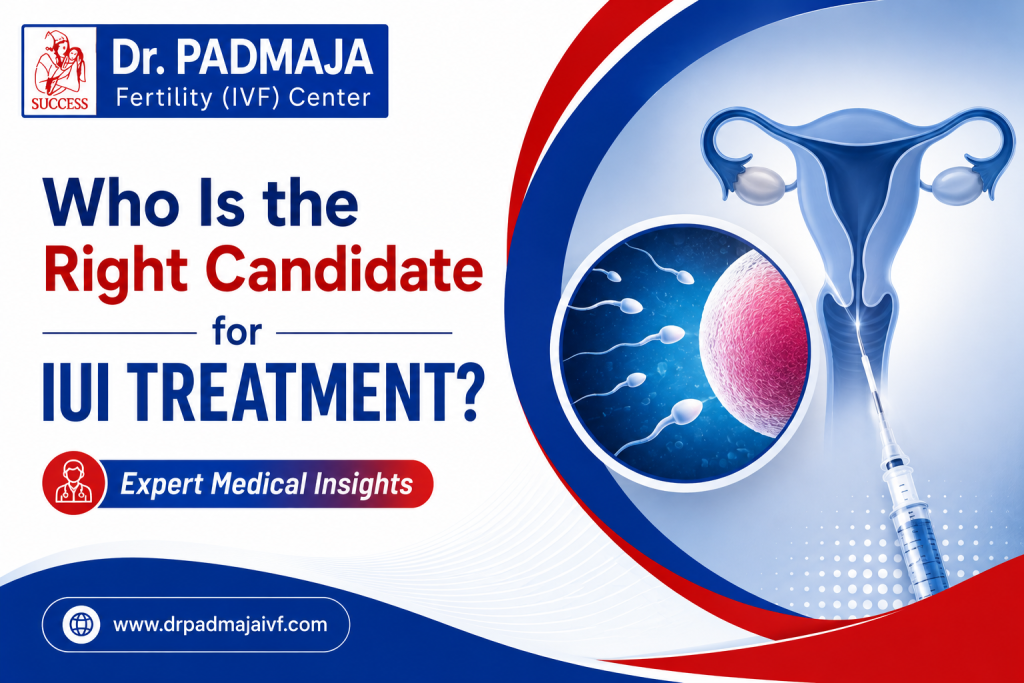
Trying to conceive can be an emotional experience, especially when pregnancy does not happen as expected. Fortunately, fertility treatments such as Intrauterine Insemination (IUI) can offer a simpler and less invasive option for some couples.
But IUI is not suitable for everyone. The right treatment depends on factors such as the woman’s age, ovulation pattern, fallopian tube health, sperm quality, and the underlying cause of infertility. A proper fertility evaluation is therefore important before deciding whether IUI is the right choice.
What Is IUI Treatment?
IUI is a fertility treatment in which specially prepared sperm are placed directly inside the uterus around the time of ovulation. This reduces the distance sperm need to travel and may increase the chance of fertilization.
Compared with IVF, IUI is generally less invasive and involves fewer procedures. It may be performed using the partner’s sperm or donor sperm, depending on the patient’s circumstances.
Who May Benefit From IUI?
1.Couples With Unexplained Infertility
Sometimes fertility tests appear normal, but pregnancy still does not occur. This is known as unexplained infertility.
In selected cases, IUI can be considered because it places a concentrated sample of healthy sperm closer to the egg during the fertile window.
2.Women With Ovulation Problems
Women who have irregular or absent ovulation may benefit from IUI combined with ovulation-inducing medications.
These medicines can help stimulate the development and release of an egg. Ultrasound monitoring allows the fertility specialist to identify the appropriate time for insemination.
3.Mild Male Factor Infertility
IUI may be an option when the male partner has relatively mild problems with sperm count, movement, or quality.
Before insemination, the semen sample is processed in the laboratory to concentrate the healthier, more motile sperm. However, IUI may not be appropriate when sperm abnormalities are severe, in which case other treatments such as IVF or ICSI may be recommended.
4.Couples Using Donor Sperm
IUI can also be used when donor sperm is required. The prepared donor sample is introduced into the uterus around ovulation.
The treatment plan depends on the individual’s reproductive health and the recommendations of the fertility specialist.
5.Certain Cervical Factors
In some women, cervical mucus or other cervical factors may interfere with sperm movement. Since IUI places prepared sperm directly into the uterus, it can help bypass some of these barriers.Who May Benefit From IUI?
When Might IUI Not Be Recommended?
Although IUI can be helpful, it is not the best option for every fertility situation.
A specialist may recommend another treatment when there is:
- Complete blockage of both fallopian tubes
- Severe male factor infertility
- Significant ovarian reserve problems
- Certain advanced reproductive conditions
- Repeated unsuccessful IUI cycles
- Other medical factors that significantly reduce the chances of IUI success
The condition of the fallopian tubes is particularly important because at least one functioning tube is generally needed for the egg and sperm to meet naturally after IUI.
How Does Age Affect IUI?
Age can influence fertility treatment outcomes because egg quantity and quality naturally decline over time. IUI may be more successful in younger women, while treatment decisions for women of advanced reproductive age may require a more individualized approach.
Rather than relying on age alone, fertility specialists consider ovarian reserve, medical history, previous treatment results, and other reproductive factors
What Happens Before IUI?
Before starting treatment, the fertility specialist usually performs a detailed evaluation.
Depending on the individual’s situation, this may include:
- Medical and reproductive history
- Hormone testing
- Ultrasound examination
- Ovarian reserve assessment
- Semen analysis
- Evaluation of fallopian tube health
These tests help determine whether IUI is appropriate and whether additional treatment may be needed.
What Is the IUI Process Like?
An IUI cycle generally involves monitoring ovulation and determining the ideal time for insemination. In some cases, fertility medications may be prescribed to stimulate ovulation.
On the day of IUI, the sperm sample is processed to select healthier, more motile sperm. A thin catheter is then used to place the prepared sperm into the uterus.
The procedure usually takes only a few minutes, and most patients can return to their normal routine shortly afterward.
How Many IUI Cycles May Be Needed?
There is no fixed number of IUI attempts that works for everyone. The appropriate number depends on factors such as age, infertility diagnosis, ovarian reserve, sperm quality, and previous treatment outcomes.
If several well-planned IUI cycles are unsuccessful, the fertility specialist may discuss whether moving to IVF or another treatment would provide a better chance of pregnancy.
How Can You Improve Your Chances With IUI?
While pregnancy cannot be guaranteed, maintaining good overall health can support fertility treatment.
Patients may benefit from:
- Eating a balanced diet
- Maintaining a healthy weight
- Avoiding smoking and alcohol
- Getting adequate sleep
- Managing stress
- Taking prescribed medicines correctly
- Attending scheduled monitoring appointments
Most importantly, follow the treatment plan recommended by your fertility specialist.
Choosing the Right Fertility Specialist
Selecting an experienced fertility team is an important part of your treatment journey. A specialist can evaluate the underlying cause of infertility and explain whether IUI, IVF, or another approach is most appropriate.
At Dr Padmaja IVF Center, fertility treatment is planned according to each patient’s individual reproductive health and treatment goals. The team provides fertility evaluation, IUI, IVF, and other assisted reproductive options with personalized medical guidance.
For couples looking for the best IVF center in Hyderabad, understanding the available treatment options and receiving an accurate fertility assessment can help in making an informed decision.
The specialists at DrPadmaja Fertility Center focus on patient-centered fertility care, helping couples understand their options and choose a treatment approach suited to their specific needs.
Final Thoughts
IUI can be a useful fertility treatment for carefully selected patients, particularly those with unexplained infertility, ovulation difficulties, mild male factor infertility, or certain cervical factors. However, success depends on several individual factors, and IUI is not suitable for every couple.
The best way to determine whether IUI is right for you is to undergo a complete fertility evaluation with an experienced specialist. With the right diagnosis, personalized treatment plan, and appropriate medical support, couples can take a more informed step toward achieving pregnancy.
About the Author

This blog is penned by a devoted content specialist passionate about raising awareness around fertility treatments and emotional well- being. With in- depth disquisition on motifs like IVF and fertility, the thing is to give precious perceptivity for couples on their trip to parenthood.
Frequently Asked Questions (FAQs)
1 What is IUI treatment?
IUI (Intrauterine Insemination) is a fertility treatment in which specially prepared sperm is placed directly into the uterus around the time of ovulation to improve the chances of fertilization.
2.Who is a good candidate for IUI?
IUI may be suitable for couples with unexplained infertility, ovulation problems, mild male factor infertility, certain cervical factors, or those using donor sperm.
3.IUI suitable for women with blocked fallopian tubes?
IUI generally requires at least one open and functioning fallopian tube. If both tubes are blocked, IVF may be a more suitable treatment option.
4.Is IUI painful?
IUI is usually a quick and minimally invasive procedure. Some women may experience mild cramping or discomfort, but significant pain is uncommon.
5.How successful is IUI treatment?
IUI success rates vary depending on age, egg and sperm quality, ovulation, fertility diagnosis, and other health factors. A fertility specialist can provide a more personalized assessment.